1. Build an integrated pediatric care platform that orchestrates care across settings and time
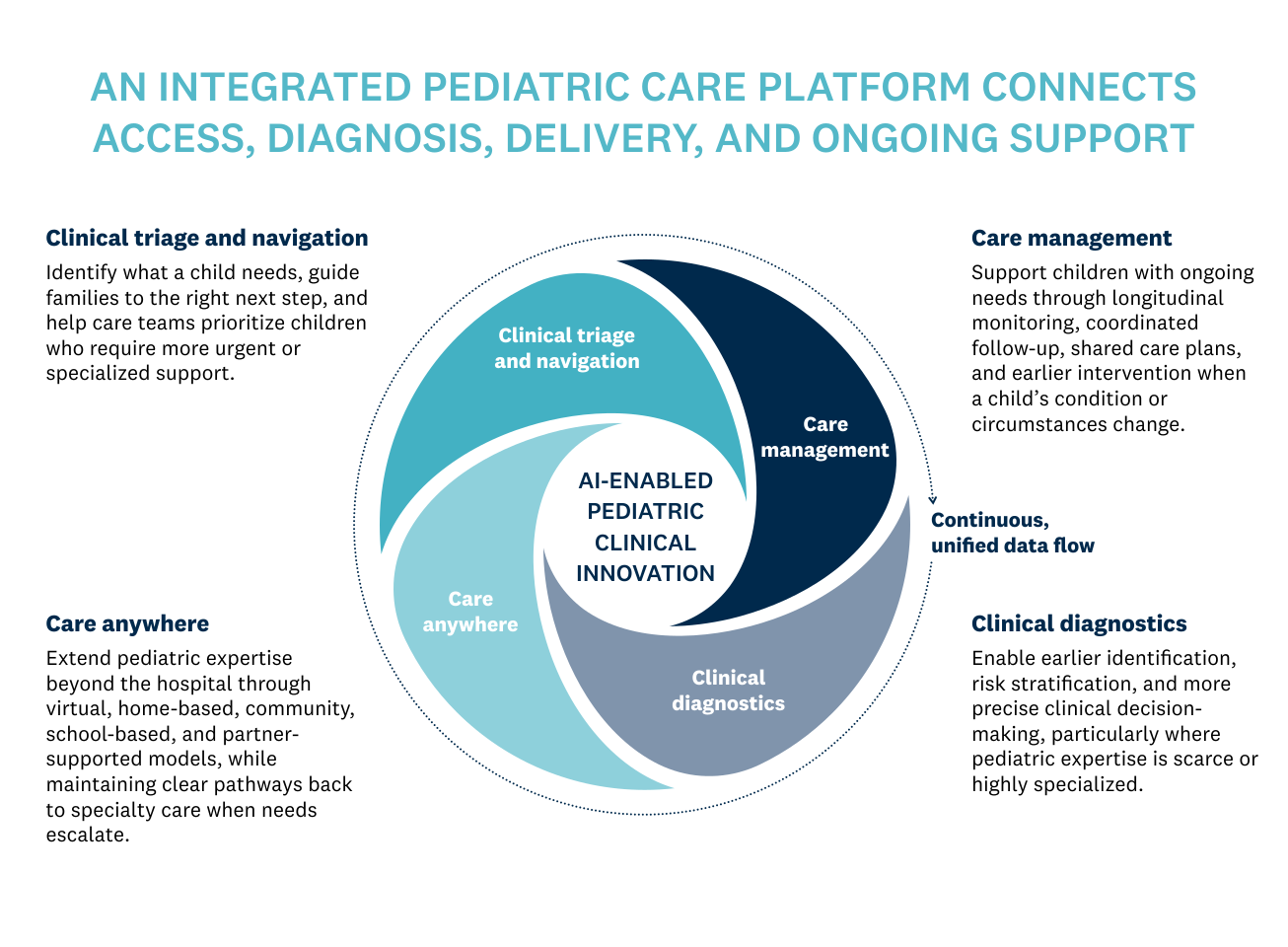
Children’s hospitals have multiple avenues for building a more integrated model of care, and many are already investing in new ways to connect care across settings. AI, integrated data, and advanced technology can help improve how needs are identified, extend pediatric expertise beyond the hospital, and support more continuous care over time.
The four core capabilities in the following graphic can work together to extend the reach and impact of children’s hospitals even within the realities of constrained clinical capacity.
Connect children and families to the right care in the right setting at the right time
Children’s hospitals have expanded access through ambulatory sites, telehealth, digital tools, and regional partnerships. These options create more ways to reach children, but the challenge is to manage these access points and delivery channels as one connected system. Integrated referral pathways, supported by AI and shared data, can help assess needs earlier, guide children to the appropriate setting, and preserve scarce specialty capacity for the patients and services that need it most.
Key considerations include:
- Tailor the reach model by clinical program. Rare conditions and infrastructure-intensive services may need to remain concentrated in a limited number of centers. More routine specialty care may be supported through regional, virtual, home-based, or partner-enabled models.
- Match specialist capacity to the level of need. Children’s hospitals should determine where direct subspecialist involvement is essential and where they can extend pediatric expertise through consultation, shared protocols, or decision support.
- Design distinct pathways for children with ongoing needs. Children with chronic conditions may benefit from more care delivered closer to home, which children’s hospitals can support with remote monitoring and clear pathways back to specialty care as needs become more complex.
- Redesign workflows and roles across the network. Clinicians and staff will need clear responsibility for triage, follow-up, escalation, and handoffs. AI should support clinical judgment and reduce work rather than add another layer of complexity.
- Extend pediatric knowledge beyond the specialist center. Education, shared clinical guidance, and technology-enabled decision support can help community providers and partners manage appropriate care locally while recognizing when escalation is needed.
- Define and capture the economic value. The benefits may come through better use of specialist capacity, earlier intervention, fewer avoidable emergency visits, and a more manageable experience for families. Children’s hospitals should consider how that value can be recognized through Medicaid managed care, value-based arrangements, and other funding models.
Support children as needs evolve over time
Many children with complex, chronic, behavioral, or developmental needs require support that changes over time, yet care remains largely organized around scheduled visits and manual follow-up. New capabilities, including remote monitoring, integrated data, and AI-enabled workflows, can support a more proactive model by helping care teams identify meaningful changes earlier and respond between encounters.
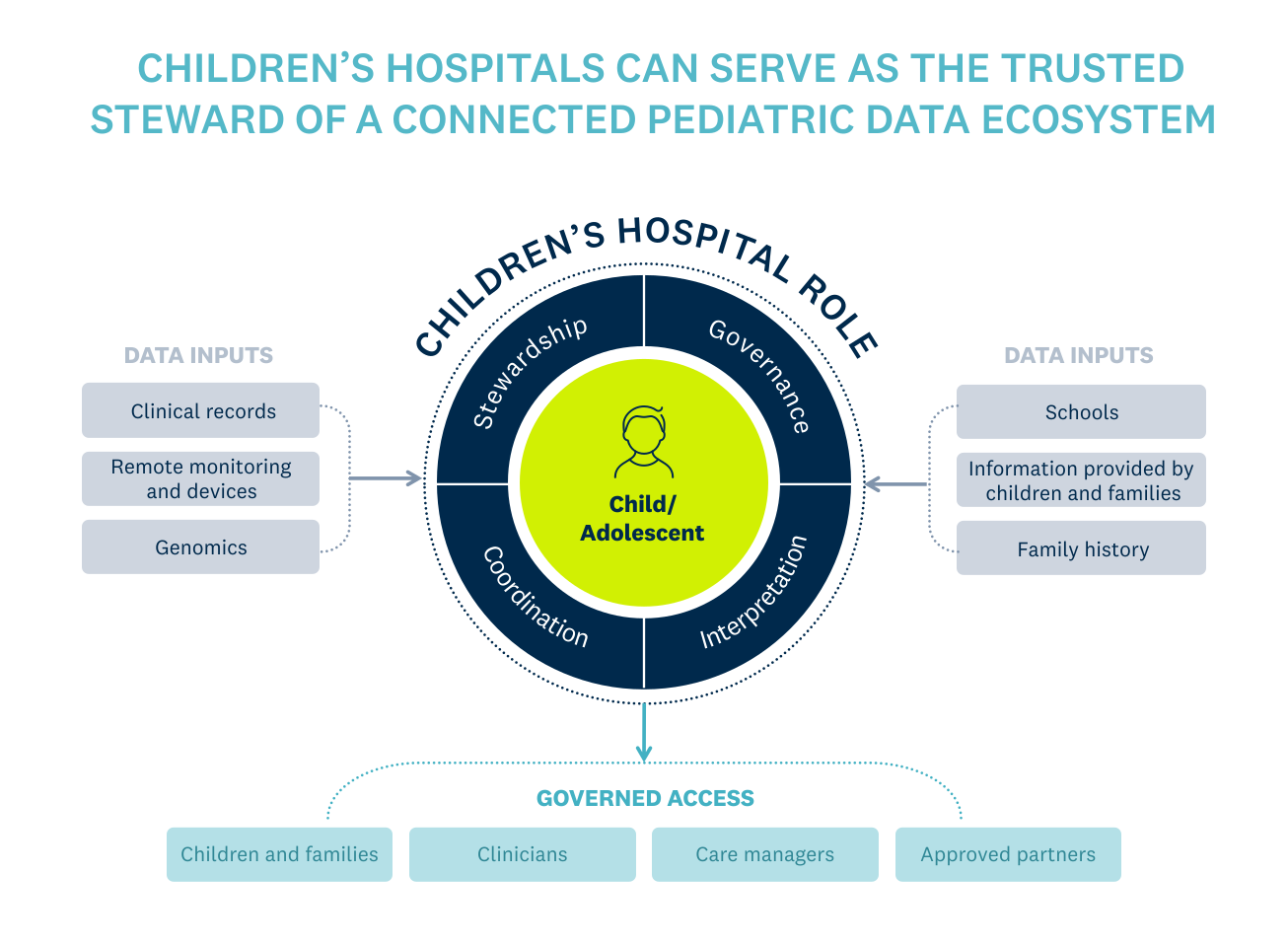
A key enabler is a longitudinal health profile that brings together the information needed to understand a child’s health, development, and care needs over time. Clinical records can be enriched with relevant data from remote monitoring, genomics, family history, and information contributed by families and care partners. Organized around the child rather than the institution, this profile can become a durable source of information that travels with the child over time and supports more informed care as needs evolve.
Future-state example: A connected pediatric platform can identify needs earlier and bring the right expertise to the child
Building on regional specialty networks, remote monitoring, school-based services, and other models already emerging in pediatrics, a children’s hospital could create a more integrated platform that follows a child’s needs across settings and over time. With appropriate consent and safeguards, a longitudinal health profile could bring together relevant clinical information, monitoring data, and input from families and care partners, with the children’s hospital serving as a trusted steward of that information.
A family might first experience the model when subtle changes suggest that a child needs additional support. For an adolescent with a chronic condition, for example, changes reported by the family, remote monitoring, or patterns identified through approved digital tools could signal rising anxiety or difficulty managing the condition before a scheduled visit or crisis occurs.
AI could help surface the change and guide the family toward the appropriate next step, whether that is virtual support, primary or specialty care, additional monitoring, or evaluation at the children’s hospital. A human care team would remain involved when clinical judgment or more complex coordination is needed.
Over time, the child would move through one connected system rather than relying on their family to identify the right entry point each time the child’s needs change. Pediatric expertise could reach further upstream and across settings, while highly specialized capacity remains focused on children who need it most.
2. Lead the next generation of pediatric discovery and innovation
Advances in research, technology, and data are creating new opportunities to accelerate pediatric discovery and improve care. Genomic platforms are generating more rapid insights into rare and complex diseases, opening new possibilities for treatments and cures. AI is expanding that potential by making it possible to analyze complex information, pursue questions involving smaller populations, and develop more tailored solutions.
Realizing that promise will require tools, evidence, and care models designed around the distinct needs of children. Yet many emerging technologies and research approaches still rely on generalized or adult-oriented data and assumptions.
Children’s hospitals have a critical role in ensuring that this new era of discovery reflects the distinct needs of children. Just as they can serve as stewards of the clinical information that supports more connected care, they can serve as stewards of pediatric evidence, expertise, and discovery. Their role is to ensure that pediatric needs shape the direction of innovation, from the questions pursued to the standards organizations use to bring new solutions into care.
Not every children’s hospital will invest to the same degree or in the same areas. Given the sustained investment required, organizations will need to focus on areas where they have distinctive strengths and the potential to create meaningful clinical and strategic value. Partnerships with academic medical centers and research institutions, technology and life sciences companies, and other pediatric healthcare organizations can amplify impact.
Two roles will be particularly important for children’s hospitals: (1) setting the standards for pediatric AI and emerging tools; and (2) directing investment toward unmet pediatric needs.
Set the standards for pediatric AI and emerging tools
The market is already producing a wide range of AI-enabled tools, but they vary significantly in their readiness for pediatric use. Some were designed for children, while others were developed for adult populations and will require further adaptation and validation. Children’s hospitals can help determine which tools are ready for use, where more evidence is needed, and when pediatric-specific solutions must be developed.
Leading institutions are beginning to evaluate these tools through staged testing and ongoing monitoring. A children’s hospital considering an AI model to identify clinical deterioration, for example, could first test it retrospectively against pediatric patient data and assess whether performance varies by age, diagnosis, race, language, or care setting.
The children’s hospital could then pilot the model with clinician oversight before refining workflows for broader adoption. Once deployed, continued monitoring would determine performance across different patient populations and clinical practices.
Importantly, as children’s hospitals better adapt and validate these tools for pediatric use, these tools may also help lower the cost of discovery for institutions at the forefront of this work. That potential is especially important as traditional research funding becomes more constrained and children’s hospitals face greater limits on their ability to subsidize discovery through operating dollars.
Direct investment toward unmet pediatric needs
As investment in AI and digital health accelerates, much of it naturally flows toward larger adult markets. Pediatric innovation remains more difficult because populations are smaller, data is fragmented, and validation requirements are high.
Children’s hospitals can help overcome those barriers by directing research funding, partnerships, and innovation capacity toward questions that are unlikely to attract sufficient commercial investment without active pediatric leadership. This role may be particularly important for independent children’s hospitals whose mission and specialized capabilities allow them to sustain focus on needs that larger healthcare and technology markets may overlook.
Future-state example: A more connected pediatric discovery model can accelerate the path from insight to treatment
Building on advances already emerging in rare disease, genomic medicine, and pediatric AI, a children’s hospital could help create a shared discovery platform that connects clinical care with research across institutions. Pediatric data from multiple sources could be continuously reanalyzed as scientific knowledge advances, allowing promising signals to surface earlier and making it easier to pursue questions that individual organizations or small patient populations could not support alone.
A child with a rare or poorly understood condition, for example, might initially receive extensive testing without a clear diagnosis or treatment path. As new evidence emerges, AI could help identify patterns across pediatric datasets and flag a potential diagnosis or therapeutic target. Clinicians and researchers could then work with partner institutions and life sciences organizations to validate the finding and determine whether an existing therapy, clinical trial, or highly tailored treatment could be appropriate.
The children’s hospital would play a critical stewardship role throughout, helping determine which questions warrant investment, ensuring that pediatric evidence and validation standards guide development, and translating promising discoveries safely into care. Over time, a model like this could make discovery more continuous, collaborative, and economically feasible for pediatric populations that have historically been difficult to study at scale.
3. Mobilize the broader child health ecosystem around the unmet needs reshaping children’s health
Many of the most pressing unmet needs affecting children’s health and well-being begin well before a child reaches the hospital. Many of these needs depend on systems outside traditional clinical care. Behavioral and developmental health, food and housing insecurity, transportation barriers, and access to trusted health guidance all require a broader response than healthcare institutions alone can provide.
Children’s hospitals are well positioned to help shape a broader response by bringing pediatric expertise and trusted leadership beyond the hospital. Digital tools and partnerships can extend their reach, helping to identify needs earlier and connect families to appropriate support across settings.
Survey findings consistently show that parents and caregivers view children’s hospitals as trusted sources of information and as institutions that act in the best interests of their communities.18 This provides a foundation for two important roles: (1) bringing trusted pediatric expertise into the channels families already use; and (2) leading on the issues that require a broader child health response.
Bring trusted pediatric expertise into the channels families already use
Families and adolescents are increasingly seeking health guidance outside traditional clinical settings. Eight in 10 parents of young children report using social media for parenting information, including topics such as nutrition and sleep. More broadly, nearly 4 in 10 US adults, and about half of adults under the age of 50, get health and wellness information from social media, even though many prominent health influencers lack professional health backgrounds.19
Adolescents facing behavioral health challenges may also turn to conversational AI agents when trusted human support is unavailable, with recent cases showing the potential for serious harm.20
Children’s hospitals can help bring credible pediatric guidance into this increasingly fragmented information environment. Their expertise should be visible in the digital channels where families and adolescents are already seeking answers, with information that helps them understand the level of concern and identify an appropriate next step. Children’s hospitals can also help shape the pediatric content and decision pathways embedded in AI-mediated tools so that users are directed toward safe and appropriate support.
Lead on the issues that require a broader child health response
Children’s hospitals have routinely focused their leadership and advocacy platforms on issues where pediatric expertise, public credibility, and coordinated action can make the greatest difference.
Children’s hospitals can help define a model that identifies needs earlier and extends support into the settings where children already receive care and spend their time. For instance, rather than identifying a behavioral health concern in primary care and referring a family into an already constrained specialty system, an alternate model can place behavioral health clinicians directly in schools to assess and treat children, coordinate with families and school staff, and connect children with more complex needs to psychiatric or crisis services.
The same role applies to developmental health, vaccine confidence, and other needs that depend on coordinated action across healthcare, schools, community organizations, public agencies, and families. Children’s hospitals can bring pediatric evidence and clinical insight to these efforts while helping clarify roles, establish shared outcomes, and ensure that children can move more seamlessly between levels of support.
Children’s hospitals’ firsthand view of unmet needs also gives them an important advocacy role. Survey findings show that parents and caregivers are willing to support children’s hospitals’ advocacy efforts by contacting elected officials and supporting public funding and tax measures, especially when they see hospitals as good community partners.21
That willingness gives children’s hospitals an opportunity to mobilize families and communities around policy change and investment in children’s health.
What is changing is the ability to pair that longstanding leadership role with deeper partnerships and new technology. Together, these capabilities can help children’s hospitals move from convening around a problem to building more coordinated and sustainable responses across the broader child health ecosystem.
Future-state example: A shared navigation model can connect families to support across the healthcare ecosystem
Building on emerging school-based and cross-sector partnership models, a children’s hospital could help create a shared navigation model for families whose needs span clinical and community services. Rather than building another standalone program, the hospital could provide pediatric stewardship and navigation infrastructure while partners contribute funding, services, and access to community resources.
A family might enter the model because a child is struggling with anxiety, missing school, and having difficulty managing a chronic condition. Instead of receiving separate referrals from different organizations, the family could be connected to one coordinated pathway that identifies the most pressing needs and organizes support around a shared plan. AI could assist with routine matching and follow-up, while a human navigator steps in when the situation requires judgment or coordination across organizations.
Because the benefits of better navigation accrue across multiple organizations, the funding model could also be shared. For instance:
- A Medicaid plan might invest because better navigation can reduce avoidable utilization.
- Public agencies could support connections to educational or social services.
- Philanthropy could help fund startup costs or services not covered by reimbursement.
- The children’s hospital could convene stakeholders and contribute infrastructure, clinical oversight, or staff.
Sharing investment across the organizations that benefit from better outcomes could create a more durable model than relying on one institution to fund and operate the full response.
Additional contributors: Abigail Arnold, Associate Vice President of Research; Tricia Geraghty, Senior Vice President, Strategic Positioning Service Line Lead at Jarrard; Anneliese Gerland, Partner and Senior Vice President of Strategy; Cindy Lee, Managing Partner and Chief Strategy Officer; and Emily Nevarez, Research Manager.