1. “AMA: AI usage among doctors doubles as confidence in technology grows,” Mar. 12, 2026, American Medical Association, https://www.ama-assn.org/press-center/ama-press-releases/ama-ai-usage-among-doctors-doubles-confidence-technology-grows.
2. Alex Montero, et al., “KFF Tracking Poll on Health Information and Trust: Use of AI For Health Information and Advice,” Mar. 25, 2026, KFF, https://www.kff.org/public-opinion/kff-tracking-poll-on-health-information-and-trust-use-of-ai-for-health-information-and-advice/.
3. Esri data based on US Census estimates; 2030 and 2035 projections based on U.S. Census Bureau, “2023 National Population Projections Tables: Main Series,” November 2023, https://www.census.gov/data/tables/2023/demo/popproj/2023-summary-tables.html.
4. Centers for Medicare & Medicaid Services, “Chronic Conditions Among Medicare Beneficiaries, Chartbook: 2012 Edition,” 2012, https://edit.cms.gov/Research-Statistics-Data-and-Systems/Statistics-Trends-and-Reports/Chronic-Conditions/Downloads/2012Chartbook.pdf.
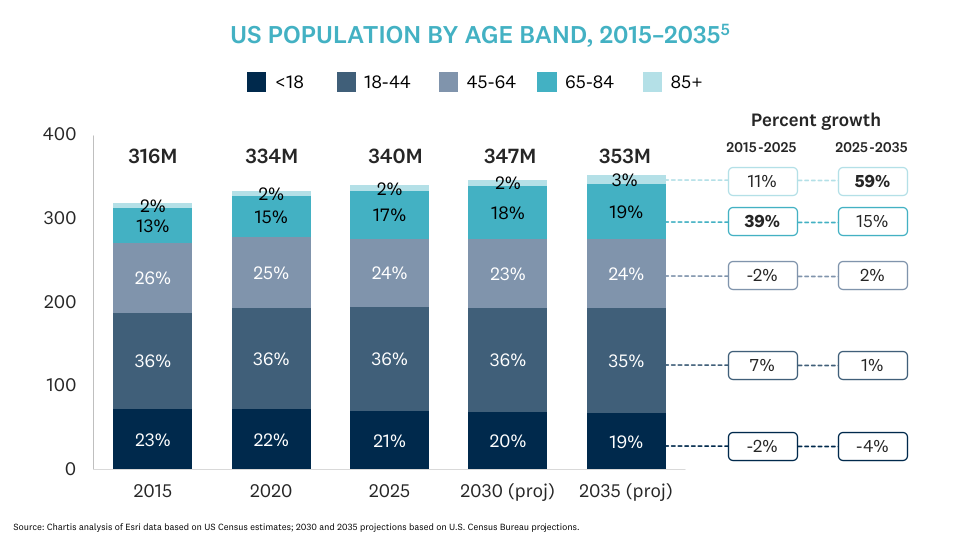
5. “2023 National Population Projections Tables: Main Series,” U.S. Census Bureau, November 2023, https://www.census.gov/data/tables/2023/demo/popproj/2023-summary-tables.html.
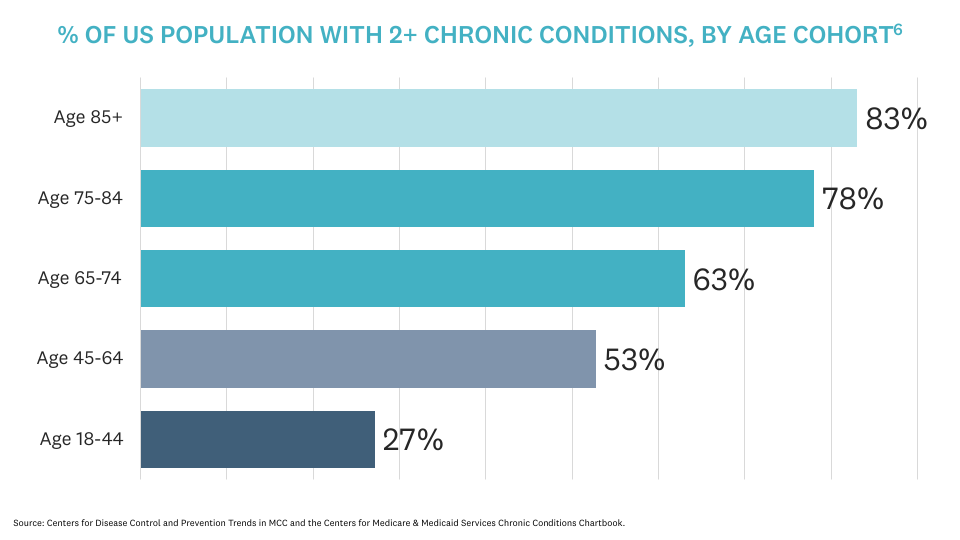
6. “Trends in Multiple Chronic Conditions Among US Adults, by Life Stage, Behavioral Risk Factor Surveillance System, 2013–2023,” Centers for Disease Control and Prevention, 2025, https://www.cdc.gov/pcd/issues/2025/24_0539.htm.; “Chronic Conditions Among Medicare Beneficiaries: Chartbook, 2012 Edition,” Centers for Medicare & Medicaid Services, October 2012, https://www.cms.gov/Research-Statistics-Data-and-Systems/Statistics-Trends-and-Reports/Chronic-Conditions/Downloads/2012Chartbook.pdf.
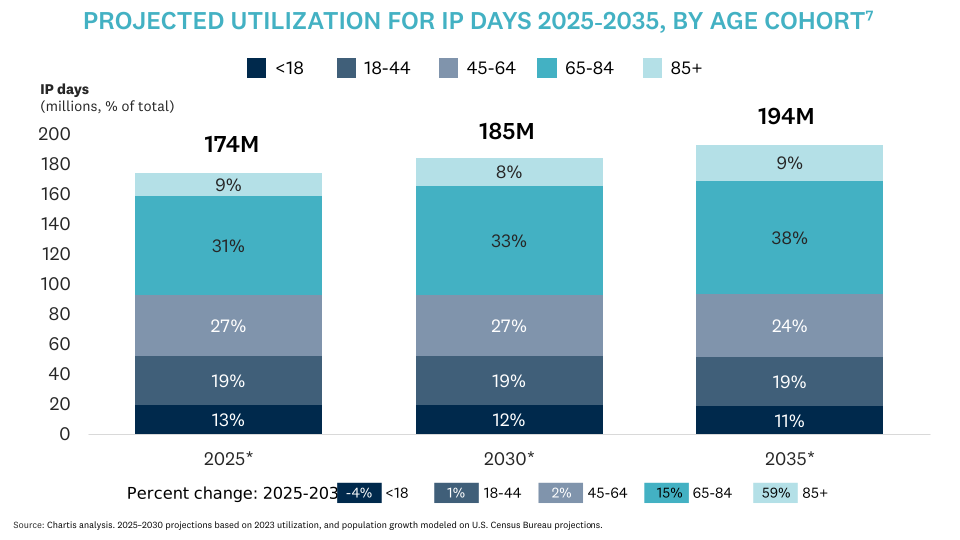
7. Chartis analysis. 2025–2030 projections based on 2023 utilization, and population growth modeled on U.S. Census Bureau projections: Healthcare Cost and Utilization Project, Agency for Healthcare Research and Quality, https://datatools.ahrq.gov/hcupnet; “2023 National Population Projections Tables: Main Series,” U.S. Census Bureau, November 2023, https://www.census.gov/data/tables/2023/demo/popproj/2023-summary-tables.html.
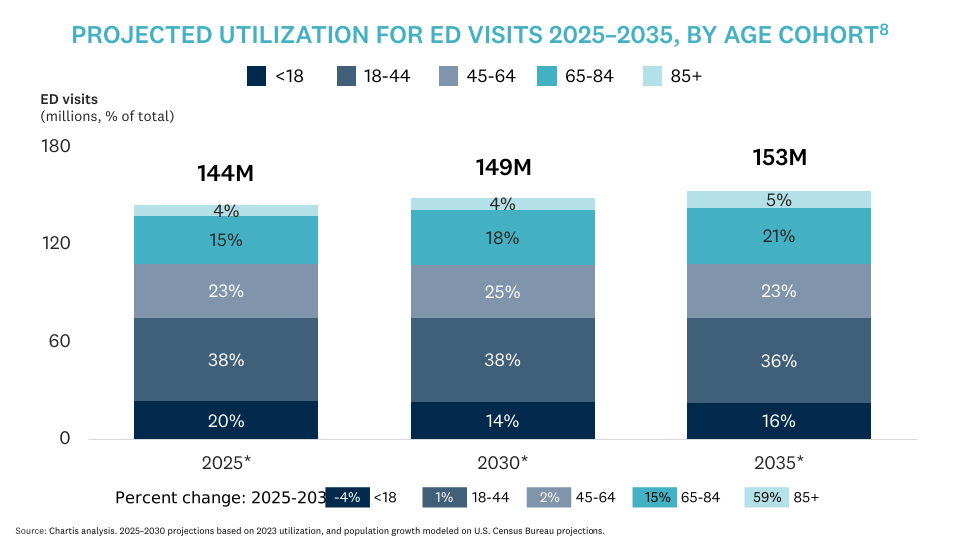
8. Chartis analysis. 2025–2030 projections based on 2023 utilization, and population growth modeled on U.S. Census Bureau projections: Healthcare Cost and Utilization Project, Agency for Healthcare Research and Quality, https://datatools.ahrq.gov/hcupnet; “2023 National Population Projections Tables: Main Series,” U.S. Census Bureau, November 2023, https://www.census.gov/data/tables/2023/demo/popproj/2023-summary-tables.html.
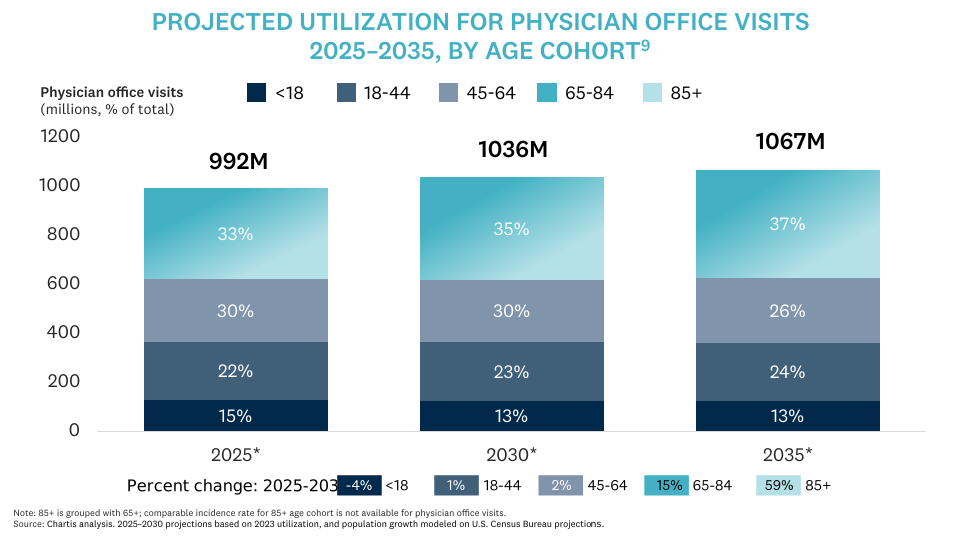
9. Chartis analysis. 2025–2030 projections based on 2023 utilization, and population growth modeled on U.S. Census Bureau projections: “Medical Expenditure Panel Survey: Office-Based Medical Provider Visits,” Agency for Healthcare Research and Quality, https://meps.ahrq.gov/mepsweb/; “2023 National Population Projections Tables: Main Series,” U.S. Census Bureau, November 2023, https://www.census.gov/data/tables/2023/demo/popproj/2023-summary-tables.html.
10. Chartis analysis. Based on the following data sources: “Workforce Projections,” Health Resources and Services Administration, December 2025, https://data.hrsa.gov/topics/health-workforce/nchwa/workforce-projections; “Physician Workforce: Projections, 2023–2038,” National Center for Health Workforce Analysis, Health Resources and Services Administration, December 2025, https://bhw.hrsa.gov/sites/default/files/bureau-health-workforce/data-research/physicians-projections-factsheet.pdf; and “Nurse Workforce Projections, 2023–2038,” National Center for Health Workforce Analysis, Health Resources and Services Administration, December 2025, https://bhw.hrsa.gov/sites/default/files/bureau-health-workforce/data-research/nursing-projections-factsheet.pdf.
11. “Summary Report: The Complexities of Physician Supply and Demand: Projections From 2021 to 2036,” Association of American Medical Colleges prepared by GlobalData Plc, March 2024, https://www.aamc.org/media/75231/download.
12. Chartis analysis. Based on the following data source: “Health Workforce Shortage Areas,” Health Resources and Services Administration, https://data.hrsa.gov/topics/health-workforce/shortage-areas/dashboard?tab=muapHeader.
13. Chartis analysis. Based on the following data sources: “Workforce Projections,” Health Resources and Services Administration, December 2025, https://data.hrsa.gov/topics/health-workforce/nchwa/workforce-projections; “Nurse Workforce Projections, 2023–2038,” National Center for Health Workforce Analysis, Health Resources and Services Administration, December 2025, https://bhw.hrsa.gov/sites/default/files/bureau-health-workforce/data-research/nursing-projections-factsheet.pdf.
14. U.S. Bureau of Labor Statistics, Occupational Employment and Wage Statistics, “May 2013 National Occupational Employment and Wage Estimates” and “May 2023 National Occupational Employment and Wage Estimates,” accessed July 28, 2026, https://www.bls.gov/oes/tables.htm
15. “Medians – Profitability improves as revenue grows faster than expenses,” Moody’s Ratings, August 2025, https://events.moodys.com/2025-miu23974-bracing-for-change/medians-profitability-improves-as-revenue-grows-faster-than-expenses.
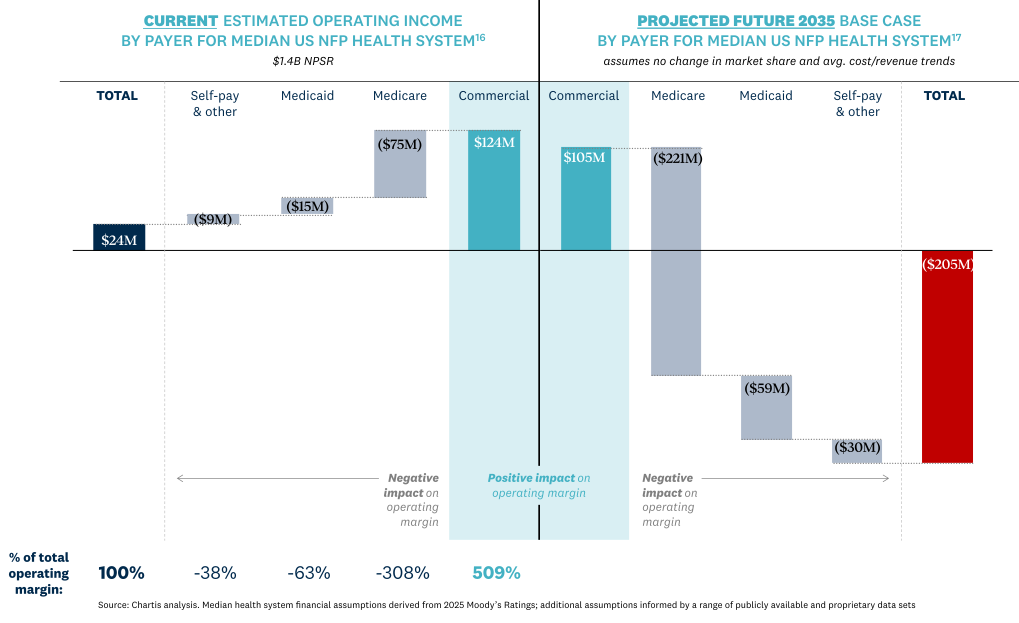
16. Chartis analysis. Median health system financial assumptions derived from 2025 Moody’s Ratings; additional assumptions informed by a range of publicly available and proprietary data sets.
17. Chartis analysis. Median health system financial assumptions derived from 2025 Moody’s Ratings; additional assumptions informed by a range of publicly available and proprietary data sets.
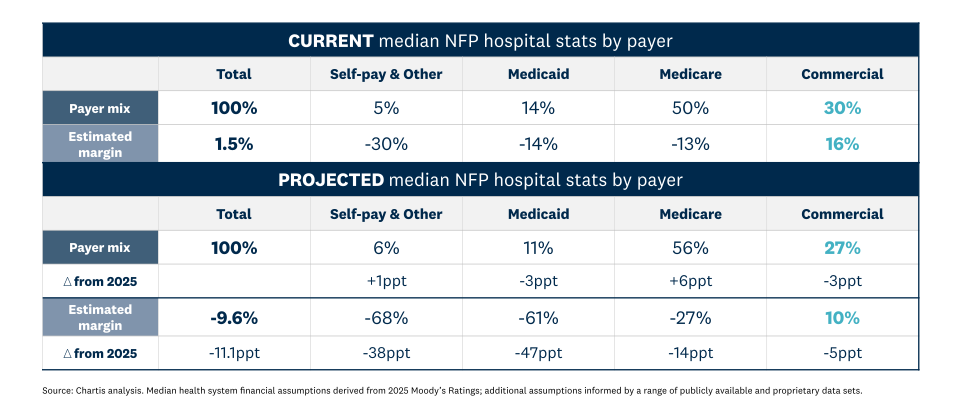
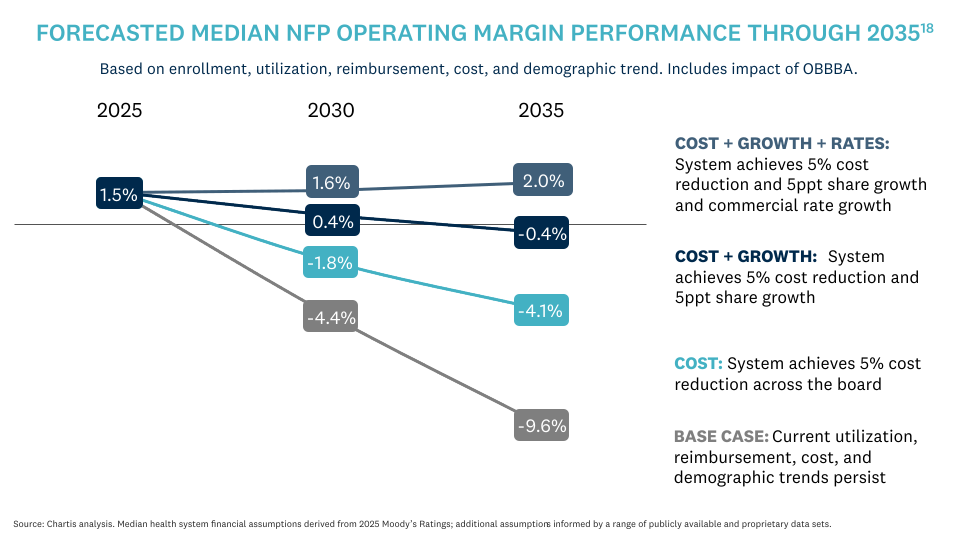
18. Chartis analysis. Median health system financial assumptions derived from 2025 Moody’s Ratings; additional assumptions informed by a range of publicly available and proprietary data sets.
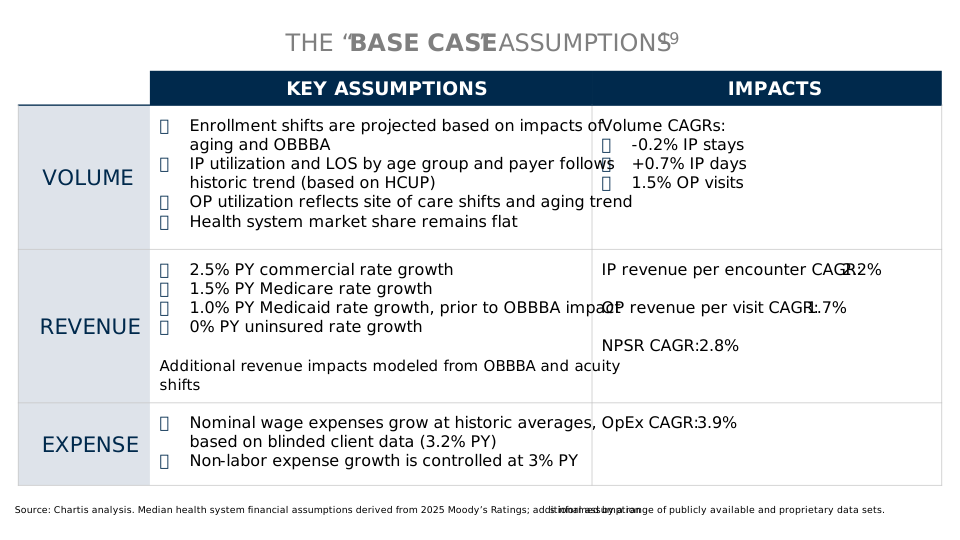
19. Chartis analysis. Median health system financial assumptions derived from 2025 Moody’s Ratings; additional assumptions informed by a range of publicly available and proprietary data sets.
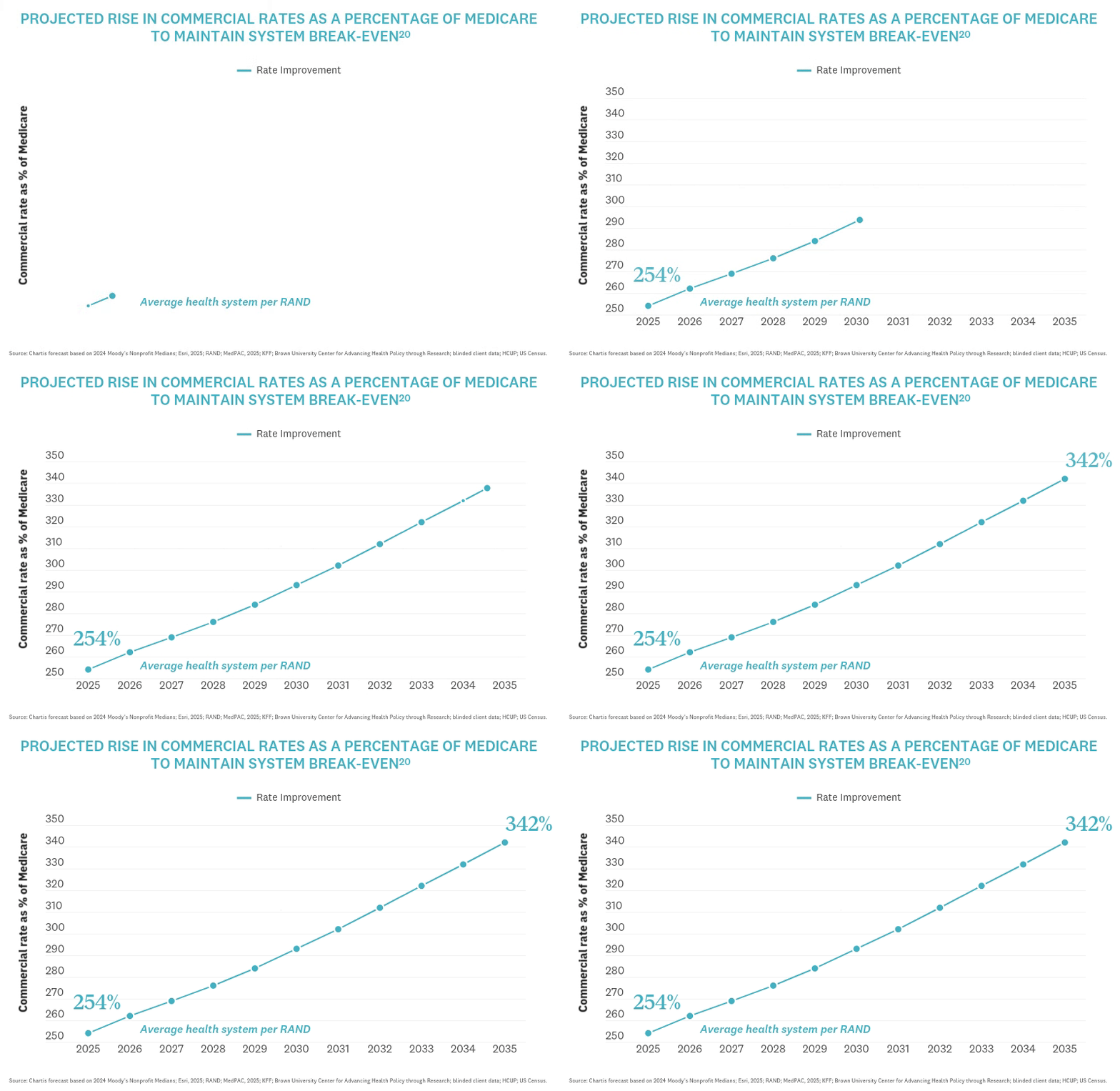
20. Chartis analysis. Median health system financial assumptions derived from 2025 Moody’s Ratings; additional assumptions informed by a range of publicly available and proprietary data sets.
21. “2025 The Cost of Caring Report,” American Hospital Association, Mar. 9, 2026, https://www.aha.org/guides-and-reports/2026-03-09-2025-cost-caring-report.
22. Chartis analysis. Assumptions derived from the following sources: “2025 Employer Health Benefits Survey,” KFF, Oct. 22, 2025, https://www.kff.org/health-costs/2025-employer-health-benefits-survey/; “Data on Employer-Based Health Insurance Premiums and Deductibles,” KFF, https://www.kff.org/state-category/health-costs-budgets/employer-based-health-insurance-premiums/; Melissa Kollar and Zach Scherer, “Income in the United States: 2024,” U.S. Census Bureau, Sept. 9, 2025, https://www.census.gov/library/publications/2025/demo/p60-286.html; “Additional Information About the Economic Outlook: 2025 to 2035,” Congressional Budget Office, January 2025, https://www.cbo.gov/publication/61189.
23. Chartis analysis based on Esri data from US Census Estimates and US Census Projections; Mark Mather and Lillian Kilduff, “The U.S. Population Is Growing Older, and the Gender Gap in Life Expectancy Is Narrowing,” Population Reference Bureau, Feb. 19, 2020, https://www.prb.org/resource/u-s-population-is-growing-older/.
24. Chartis analysis based on Esri data from US Census Estimates and US Census Projections; Mark Mather and Lillian Kilduff, “The U.S. Population Is Growing Older, and the Gender Gap in Life Expectancy Is Narrowing,” Population Reference Bureau, Feb. 19, 2020, https://www.prb.org/resource/u-s-population-is-growing-older/; “March 2026 Report to the Congress: Medicare Payment Policy,” Medicare Payment Advisory Commission, Mar. 12, 2026, https://www.medpac.gov/wp-content/uploads/2026/03/Mar26_MedPAC_Report_To_Congress_SEC.pdf; “The 2025 Annual Report of the Boards of Trustees of the Federal Hospital Insurance and Federal Supplementary Medical Insurance Trust Funds,” Centers for Medicare & Medicaid Services, June 18, 2025, https://www.cms.gov/oact/tr/2025.
25. “2025: The State of Generative AI in the Enterprise,” Menlo Ventures, Dec. 9, 2025, https://menlovc.com/perspective/2025-the-state-of-generative-ai-in-the-enterprise/.
26. “AI Chart Weekly: Financing the AI Supercycle,” MUFG Americas, Dec. 19, 2025, https://www.mufgamericas.com/sites/default/files/document/2025-12/AI_Chart_Weekly_12_19_Financing_the_AI_Supercycle.pdf.
27. Global AI venture funding estimates for 2025: ~$212B (Crunchbase) to ~$225.8B (CB Insights); Gené Teare, “Global Venture Funding in 2025 Surged as Startup Deals and Valuations Set All-Time Records,” Jan. 7, 2026, Crunchbase News, https://news.crunchbase.com/venture/global-funding-2025-ai-startups-teare/; “State of AI 2025 Report,” CB Insights, Jan. 13, 2026, https://www.cbinsights.com/research/report/ai-trends-2025/.
28. “OpenEvidence and NewYork-Presbyterian, Columbia University and Weill Cornell Medicine Expand Clinical AI Tools Across New York City and Westchester,” OpenEvidence, July 9, 2026, https://www.openevidence.com/announcements/openevidence-and-newyork-presbyterian-columbia-university-and-weill-cornell-medicine-expand-clinical-ai-tools-across-new-york-city-and-westchester.
29. “Augmented intelligence in medicine,” American Medical Association, updated Mar. 13, 2026, https://www.ama-assn.org/practice-management/digital-health/augmented-intelligence-medicine.
30. Alex Montero, et al., “KFF Tracking Poll on Health Information and Trust: Use of AI For Health Information and Advice,” Mar. 25, 2026, KFF, https://www.kff.org/public-opinion/kff-tracking-poll-on-health-information-and-trust-use-of-ai-for-health-information-and-advice/.